Looking for a Honolulu neighborhood that feels green, established, and a little tucked away, yet still keeps you close to the city? Mānoa stands out for exactly that reason. If you are considering a move here, this guide will help you understand what daily life, housing, and school options can really look like in the valley. Let’s dive in.
Why Mānoa feels different
Mānoa is best understood as a long-established residential valley community, not a dense urban district. Its shift from agricultural land to residential use began in the late 19th and early 20th centuries, with growth tied to streetcar expansion and the move of the College of Hawaiʻi to Mānoa in 1912.
That history still shapes the neighborhood today. You will notice a more house-oriented setting, mature vegetation, and a layout that follows the valley rather than a rigid street grid. For many buyers, that creates a quieter and more residential feel than other central Honolulu areas.
Mānoa homes have range
One of the biggest misconceptions about Mānoa is that it has one signature look. In reality, the valley includes a wide mix of home styles, eras, and renovation levels.
Historic records identify influences including Colonial Revival, Craftsman, Mediterranean Revival, and Tudor Revival. Other homes are described as American Craftsman or Hawaiian Craftsman, while some upper Mānoa properties include mid-century modern features, bungalow influence, or later ranch-style elements.
For you as a buyer or seller, that means home-by-home evaluation matters. Two properties on the same street can offer very different layouts, levels of upkeep, and long-term maintenance needs.
Larger lots are part of the story
Parts of historic Mānoa, especially areas tied to early subdivision patterns like College Hills, were developed with relatively generous lots. Some original lot sizes were roughly 10,000 to 20,000 square feet, and homes were often set back from the street.
That can translate into more yard space, more privacy between homes, and a stronger single-family feel. It also means outdoor areas, slopes, and access points deserve close attention during your search.
Topography matters as much as floor plan
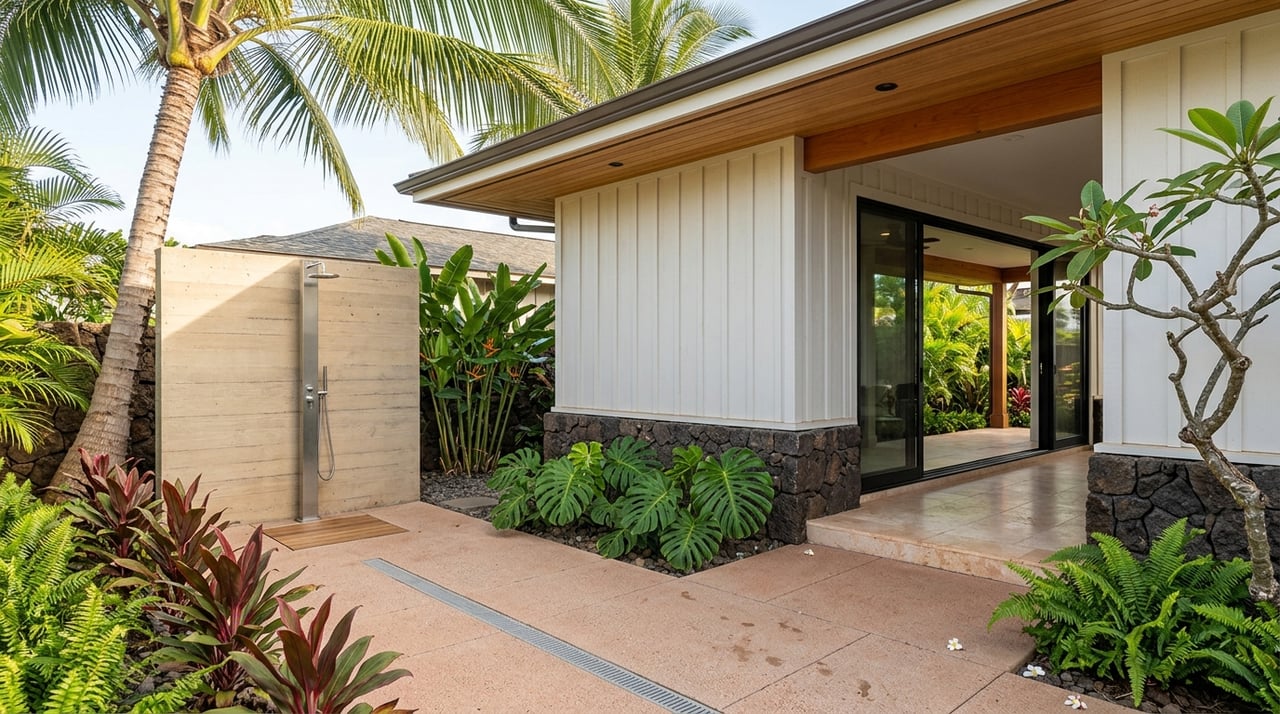
Mānoa’s streets and homes often follow the natural shape of the valley. Historic descriptions point to tree-lined roads, grassy front yards, and homes set on sloping or terraced lots, sometimes with garages or storage built into the hillside.
In practical terms, lot usability can matter just as much as interior square footage. Driveway slope, runoff patterns, retaining walls, and how outdoor space is configured can all affect everyday convenience and future upkeep.
Rain is part of everyday living
Mānoa’s microclimate is one of the neighborhood’s defining features. Lyon Arboretum reports average annual rainfall of 165 inches, and Hawaiʻi’s terrain can create sharp rainfall differences over short distances.
That helps explain why Mānoa often feels greener and wetter than much of central Honolulu. If you love lush landscaping, cool valley conditions, and a strong connection to nature, that may be a major draw.
What the climate means for homeowners
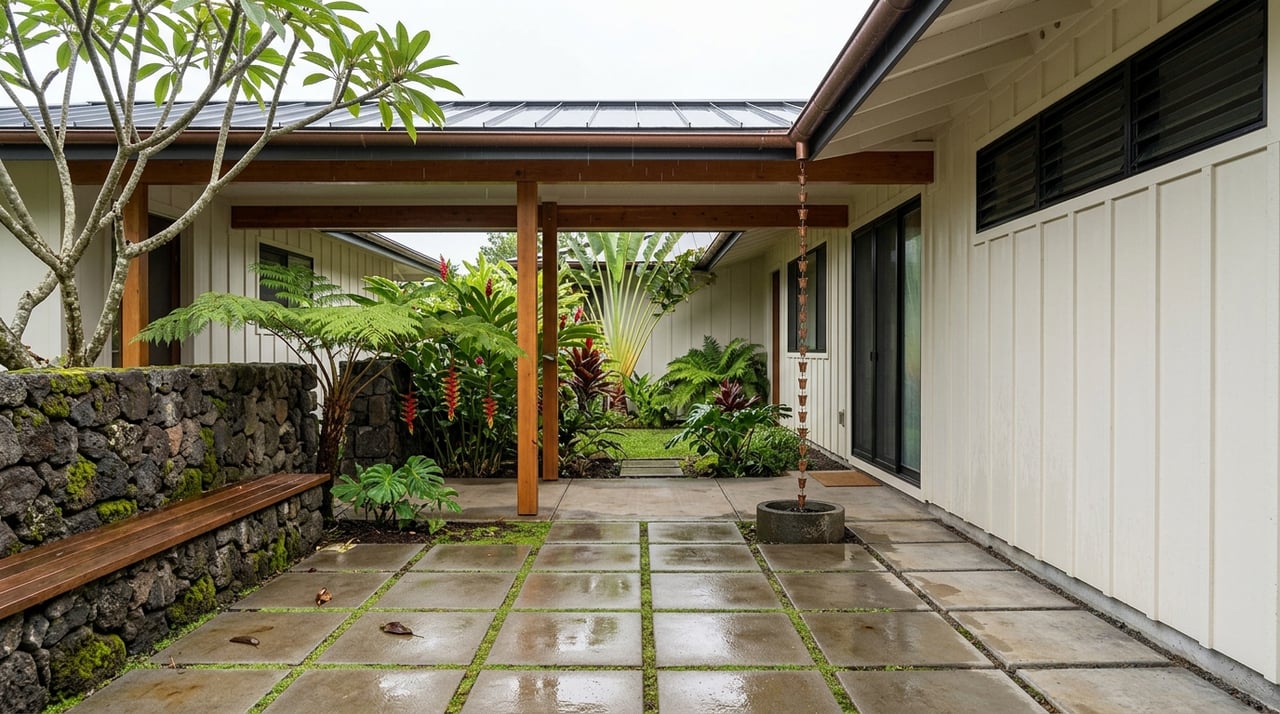
With that extra rainfall comes a different maintenance lens. In Mānoa, it is smart to pay close attention to roof condition, gutters, drainage, crawl spaces, and general moisture management.
On hillside properties, retaining walls and runoff may also need ongoing attention. For buyers, these are important due diligence points. For sellers, they are often worth addressing early to support a smoother transaction.
Flood awareness is important
Flood history is also part of understanding the valley. NOAA and the National Weather Service describe the October 30, 2004 Mānoa flood, when Mānoa Stream overflowed its banks, about 120 homes sustained damage, and estimated losses reached $85 million before inflation adjustment.
The same source notes that heavy rain in March 2026 again caused Mānoa Stream to overflow and affect roads and a nearby elementary school. If you are considering a home here, it is wise to factor weather patterns and location-specific conditions into your decision-making.
Outdoor access is a real lifestyle benefit
One of Mānoa’s strongest lifestyle advantages is how closely daily life connects to greenery. Lyon Arboretum is located in the valley, and the DLNR Nā Ala Hele trail system includes Mānoa Falls Trail, Mānoa Cliff Trail, and ʻAihualama Trail.
That kind of access can make it easy to build outdoor time into your week. At the same time, local visitor guidance recommends rain gear, sturdy footwear, and water, which says a lot about what the valley’s day-to-day conditions can be like.
Schools in Mānoa are address-dependent
If schools are a priority in your move, the most important thing to know is that exact address matters. Hawaiʻi public schools are assigned by geographic district, and the Hawaiʻi Department of Education recommends using its SchoolSite Locator and confirming directly with the school because service boundaries and enrollment counts can change.
That means you should not assume a home in Mānoa maps to a specific campus without verification. Even within the same broader area, school assignment can depend on the exact property address.
Nearby public school options
Public-school options commonly considered by Mānoa buyers include:
- Mānoa Elementary at 3155 Manoa Road, serving grades K-6
- Noelani Elementary at 2655 Woodlawn Drive, serving grades K-5
- Robert Louis Stevenson Middle at 1202 Prospect Street, serving grades 6-8
- President Theodore Roosevelt High at 1120 Nehoa Street, serving grades 9-12
These schools are part of the local education picture, but assignment should always be confirmed based on the specific home you are considering.
A nearby public charter option
University Laboratory School, located on the UH Mānoa campus at 1776 University Avenue, is a public charter option nearby. The school describes its mission as both educating students and serving as a research-and-development laboratory for innovative teaching and learning.
For families exploring Mānoa, this adds another layer to consider. The right fit may depend not only on address, but also on program structure and your household’s priorities.
UH Mānoa shapes the neighborhood
UH Mānoa is the valley’s anchor institution, and its location plays a major role in how the neighborhood functions. The university says the campus is about 4 miles from downtown Honolulu, 2.5 miles from Waikīkī, and 8 miles from Honolulu International Airport.
It is also accessible from H-1, and TheBus serves the campus at Sinclair Circle and nearby stops. For many residents, that means Mānoa offers a residential setting with relatively convenient access to the rest of urban Honolulu.
A central location without a dense feel
That balance is a big reason Mānoa appeals to so many buyers. You can be close to downtown jobs, the university, and the broader Honolulu corridor while living in an area that feels more tucked into the landscape.
Compared with more urban central Honolulu neighborhoods, Mānoa generally offers more detached-home character, more greenery, and more lot space. The trade-off is that it often brings more slope, more rainfall, and more upkeep.
What to weigh before buying in Mānoa
Mānoa can be a great fit if you value a greener setting, established residential streets, and a home-centered lifestyle close to town. It may be especially appealing if you want access to trails, proximity to UH Mānoa, and a neighborhood with a long-standing sense of place.
At the same time, it helps to go in with clear eyes. In this valley, home condition is only part of the story. Lot shape, drainage, moisture management, and school assignment can be just as important to your long-term experience.
What sellers should keep in mind
If you are preparing to sell a Mānoa home, the neighborhood’s strengths are often clear: greenery, lot character, architectural variety, and location near central Honolulu. Buyers are often drawn to the valley’s residential feel and the sense that homes here are tied to the landscape.
Presentation and preparation matter, though. Because buyers are often paying close attention to drainage, maintenance, and overall property condition, a well-managed listing process can help your home’s advantages stand out with greater clarity.
Whether you are buying, selling, or relocating within Honolulu, working with an advisor who understands neighborhood-level differences can make the process more focused and less stressful. If you want tailored guidance on Mānoa and how it compares with other Oʻahu micro-markets, connect with Jenn Lucien.
FAQs
What are Mānoa homes generally like?
- Mānoa homes vary widely in style and era, with influences that include Craftsman, Colonial Revival, Mediterranean Revival, Tudor Revival, mid-century modern, bungalow, and ranch-style design.
What should buyers look closely at in Mānoa properties?
- Buyers should pay attention to lot slope, drainage, runoff, retaining walls, roof condition, gutters, crawl spaces, and moisture management, especially on hillside properties.
How much rain does Mānoa get?
- Lyon Arboretum reports average annual rainfall of 165 inches, which helps explain the valley’s lush landscaping and wetter feel.
How do public school assignments work in Mānoa?
- Hawaiʻi public schools are assigned by geographic district, so the exact home address matters and assignments should be confirmed directly with the school and the DOE locator.
What schools do Mānoa buyers often consider?
- Nearby options commonly considered include Mānoa Elementary, Noelani Elementary, Robert Louis Stevenson Middle, President Theodore Roosevelt High, and the public charter University Laboratory School.
How close is Mānoa to central Honolulu destinations?
- UH Mānoa reports the area is about 4 miles from downtown Honolulu, 2.5 miles from Waikīkī, and 8 miles from Honolulu International Airport.